For newbies to endurance like me or people who have no clue that endurance rides are like, the “vet bag” (also called a crew bag, though not all of us have "crew") is the thing a rider puts together that is hauled to vet checks that are out of main camp. Since you won't have access to your trailer during these checks, what goes in the vet bag is very important but over-packing is also a concern. In short: it should include whatever horse and rider will need during a brief hold time (usually around 45 minutes, which includes the time spent vetting in) to get them back on the trail when the time comes healthy and ready for the next stretch.
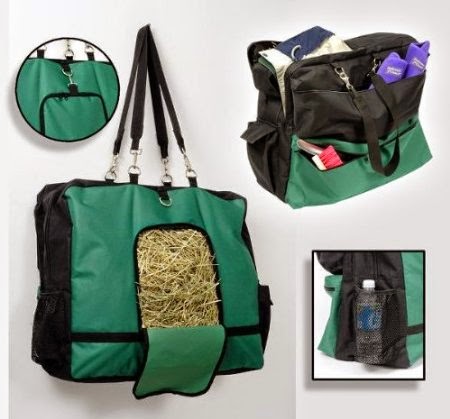
This discussion was given at the PNER conference, 2015, and we got to
see what various riders actually packed in their bags (or boxes) for this need.
I am very inspired by the idea of putting things in a box that could also serve
as a mounting block, since I don’t mount from the ground on my meat-tube pony
(plus, it’s healthier for them anyway to use a block). Quite a bit of other general horse-and-rider
care advice was peppered into the discussion, which I took notes on as well.
Other endurance riders have written on this topic. I particularly like Karen Chaton's overview (with pictures!) on her blog.
Karen ChatonK
To start, here are some of the things people included in their
bags/boxes:
- A change of underwear.
- A wool or fleece cooler – for your horse. Many people just had a wool or fleece blanket that could just as easily be tossed over a horse as it could a person.
- Any medications you or your horse might require – though riders made a point to say you should carry these things on you as well.
- Boot replacements if you boot your horse (always carry at least one extra boot with you, even if your horse is shod).
- Baby butt wipes – I use these as part of normal horse grooming at the barn already (the kind without soap that have just water and aloe, as both my horse and I have sensitive skin).
- Travel size insect repellent (also carry on you).
- Gall salve, especially if your horse has sensitive skin.
- A waterproof container – something that you can toss around without it leaking to prepare mash in ahead of time for ease of feeding.
- Dental floss (for repairs) – this is also easy to carry on you (just take the little roll, not the plastic case).
- Duct tape on toilet paper rolls so it can be squashed flat.
- Sunscreen and chapstick with sunscreen.
- Pack food for both your horse and you. Some people had hay in the bottom of their box/bag so the horse could eat directly out of it and not make a mess. Haystack Special Blend – a pelleted non-grain feed we have in the PNW – seems especially popular. I actually feed it to Deli right now since it turns into a nice mash almost instantly and she likes it despite it not having tons of sugar (not even molasses) and is a higher fat feed.
- Collapsible bucket – to wet your mashes and water your horse if the tanks are crowded.
- Probiotic paste – if your horse has the beginning feeling of being “funky” you can give them a dose to head it off and make their tummy feel better proactively.
- Electrolytes for both human and horse – some people spoke of having prepared electrolytes that they used to give at the check and also to replace whatever they used on the trail.
- “Extra” bandana, because those things have a million uses.
- If you have a very LONG hold, pack a camp stool so you can sit.
- Someplace clean to set your saddle and pad – the best example I saw was a reflective blanket, which also is of great use in an emergency of any kind (and can be used to keep humans and horses warm in iffy conditions).
- Bodyglide, anti monkey butt, and related products (which can sometimes double as gall salve for the horse too).
- Some room for things that you might want to shed/take off – like your warmer clothing you had at the start of the ride.
- Vet wrap, because it’s handy for both human and horse injuries.
- Pellet towels – add a little water and they puff up into something you can scrub you or your horse with.
- Snack foods to replenish your saddle bags with – carrots cut into small pieces in particular were discussed because they are naturally high in electrolytes.
As this discussion was going on, I was thinking about what I would
personally add to this list. Given my propensity to get heat stroke even on a
cool day, I’d probably pack water bottles to replace those in my saddle. If it’s
a hot day I’d hopefully have frozen those bottles beforehand, which would allow
them to double as “ice packs” for whatever mash I’m making up for my horse. I’d
also include sanitary pads for the obvious reason and because they make very
good sanitary and non-stick absorbent bandages for bleeding wounds in horses,
humans and dogs (coupled with some vet wrap). Ask me about the time I sliced my
thigh open on a trail ride and used a sanitary pad duct taped over the cut
UNDER my riding tights to soak up the blood and continue my ride without the
cut being further irritated by rubbing against my pants. They are useful things
and easy to cram down in any kind of pack.
Another thing I would personally include: a spare pair of sunglasses
for my extremely light sensitive eyes, and an extra pair of contacts and eye
solution. I now have daily disposable contacts that I only really use when
doing outdoor activities (glasses work better for my hours spent in front of a
computer) and sometimes a fresh pair is a huge relief if a trail is very dusty
or my eyes are bothering me. And the sunglasses thing? I don’t tend to misplace
many things on a regular basis, but I have a habit of breaking sunglasses. This
is a problem regardless of whether they are cheap or expensive, so I usually go
for the cheap ones. Given the unusual genetics/mutation I have that means I
have no melanin in the second layer of my iris, in bright sun I can be almost
blind. I’m sure having better low light vision than the average person is an
advantage sometimes in endurance, but the sun thing is always going to be an
issue! So having contacts and sunglasses
is a kind of necessity for outdoor daytime sports.
One consideration discussed in this panel is how heavy your vet bag is,
since volunteers will be loading and unloading them. To keep weight down, quite
a few of the above items could be omitted or simply carried with you at all
times. I think my top needs would be a replacement boot (since my horse is
booted and future horses will probably be booted), blanket, and food/water for
both me and my horse. Electrolytes would really depend on the distance we are
going!
![By Kristian Peters -- Fabelfroh 08:52, 20 September 2005 (UTC) (photographed by myself) [<a href="http://www.gnu.org/copyleft/fdl.html">GFDL</a> or <a href="http://creativecommons.org/licenses/by-sa/3.0/">CC-BY-SA-3.0</a>], <a href="http://commons.wikimedia.org/wiki/File%3ADactylis_glomerata_bluete1.jpeg">via Wikimedia Commons</a>](https://www.blogger.com/By%20Kristian%20Peters%20--%20Fabelfroh%2008:52,%2020%20September%202005%20(UTC)%20(photographed%20by%20myself)%20%5B%3Ca%20href=%22http://www.gnu.org/copyleft/fdl.html%22%3EGFDL%3C/a%3E%20or%20%3Ca%20href=%22http://creativecommons.org/licenses/by-sa/3.0/%22%3ECC-BY-SA-3.0%3C/a%3E%5D,%20%3Ca%20href=%22http://commons.wikimedia.org/wiki/File%3ADactylis_glomerata_bluete1.jpeg%22%3Evia%20Wikimedia%20Commons%3C/a%3E) Other items that could go in the vet bag OR your saddle bags (or both)
that don’t take up a lot of space or weight were on my mind. Benadryl, in
particular, was mentioned in this panel. Experienced riders said that you
should always carry this (or similar medication) on you in case you get a bite
or sting, even if you are not allergic to things normally.
Other items that could go in the vet bag OR your saddle bags (or both)
that don’t take up a lot of space or weight were on my mind. Benadryl, in
particular, was mentioned in this panel. Experienced riders said that you
should always carry this (or similar medication) on you in case you get a bite
or sting, even if you are not allergic to things normally.
As far as food for the horse is concerned, most people brought some sort of mash or concentrated feed (like soaked oats or the aforementioned Haystack) with them to out-checks, and the feed pans required to serve the horse. Several included a flake of the horse's favorite hay in the bottom of their bags or boxes. Still, the experienced riders made a point to say that grass is the best thing for an endurance horse as it contains natural electrolytes, sugars, fiber, and water. Grass is horse fuel. I expect you can ask people if the out-check will have grass for hand-grazing in lieu of bringing hay.
What things do you put in your vet bag for out checks? What things
would you include that aren’t already on the list? What, of the above things,
would you just carry on you but not necessarily in a vet bag?


